Live demo
aidisclose.js renders the interaction-disclosure banner, visible labels on marked content, and machine-readable page metadata, in all 28 languages. Pick one:
On narrow screens the snippet switches to a compact chip. Tap the chip to open the full notice, or widen the window to see the banner.
Evidence report
Inside a real evidence export
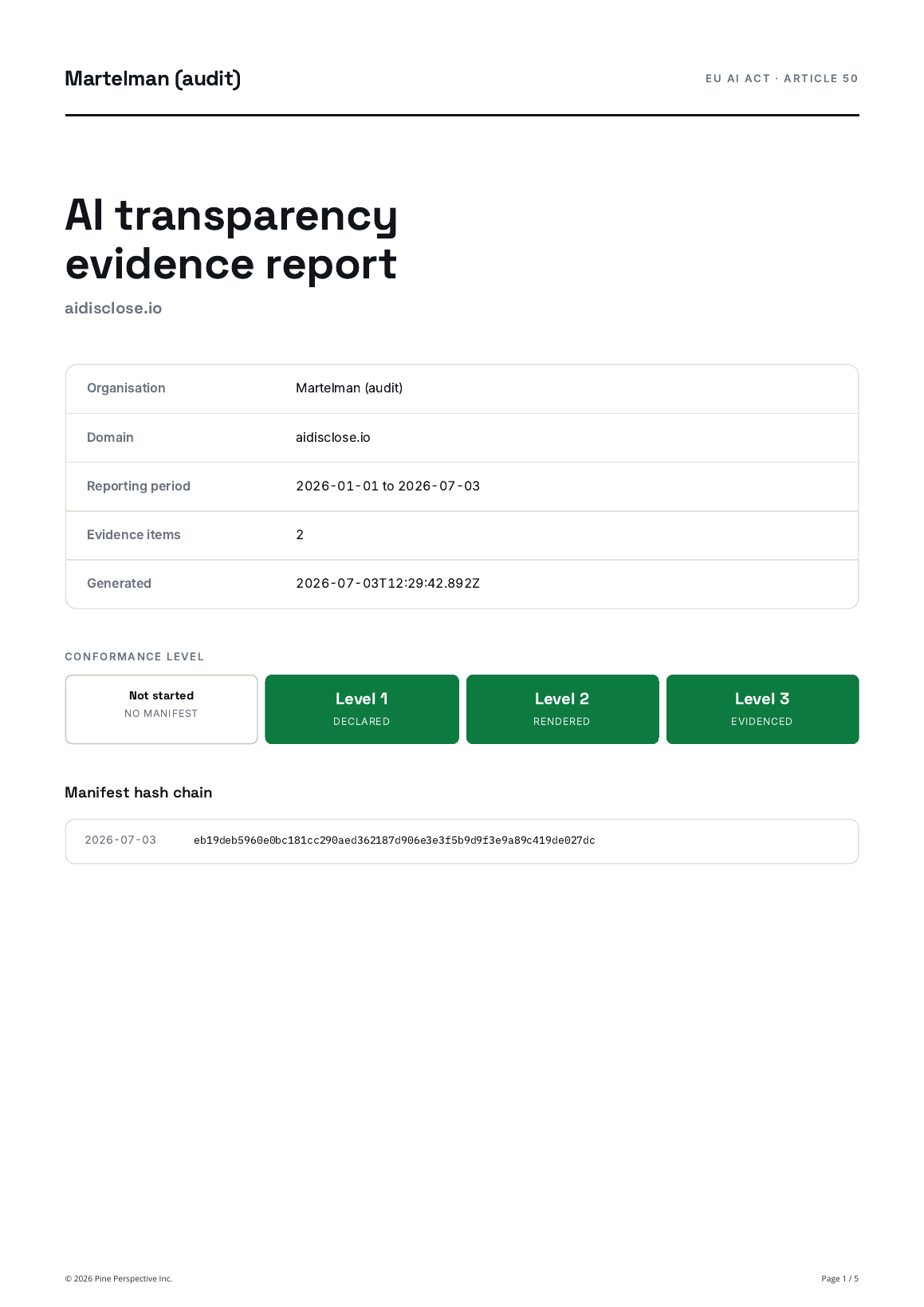
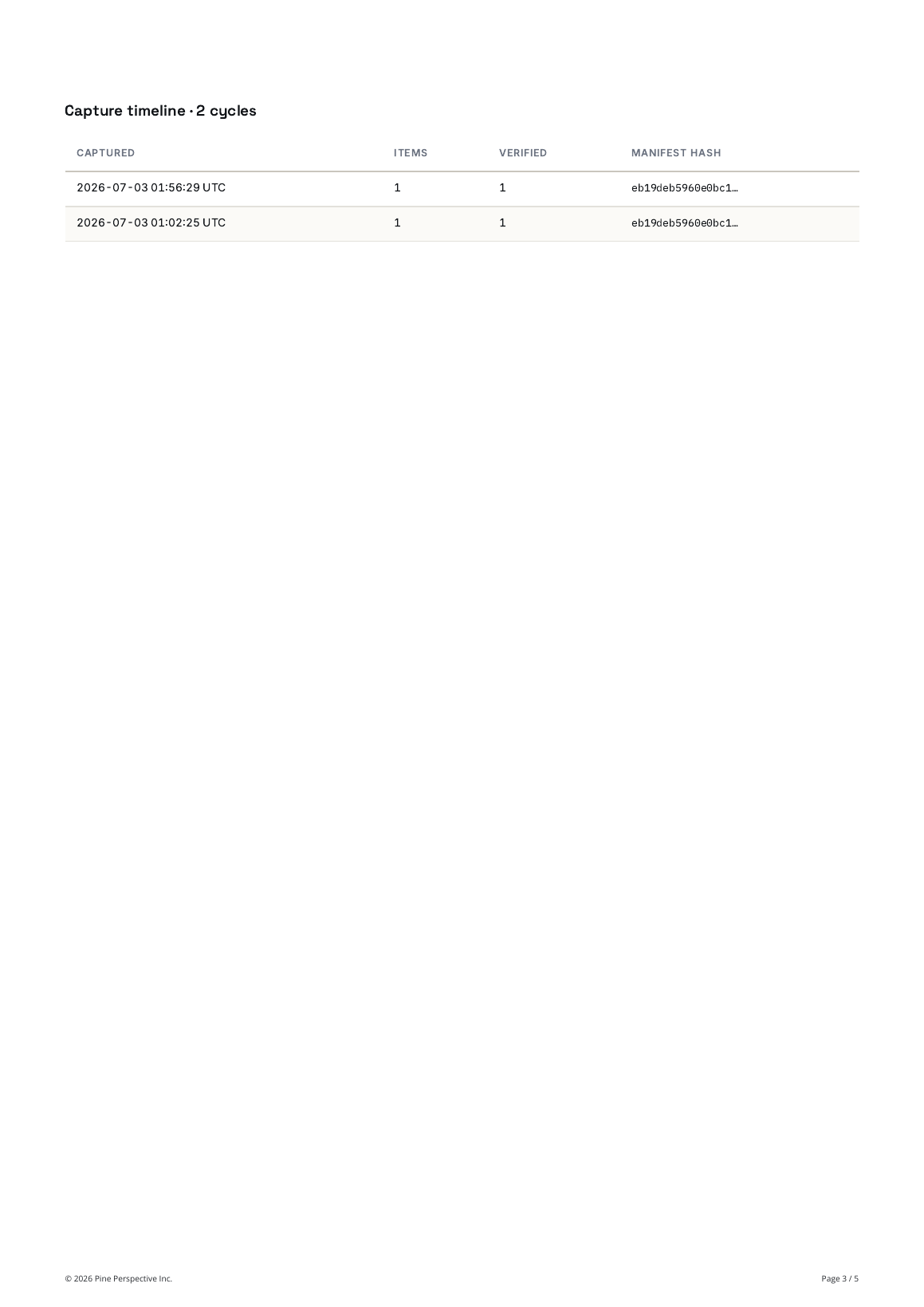
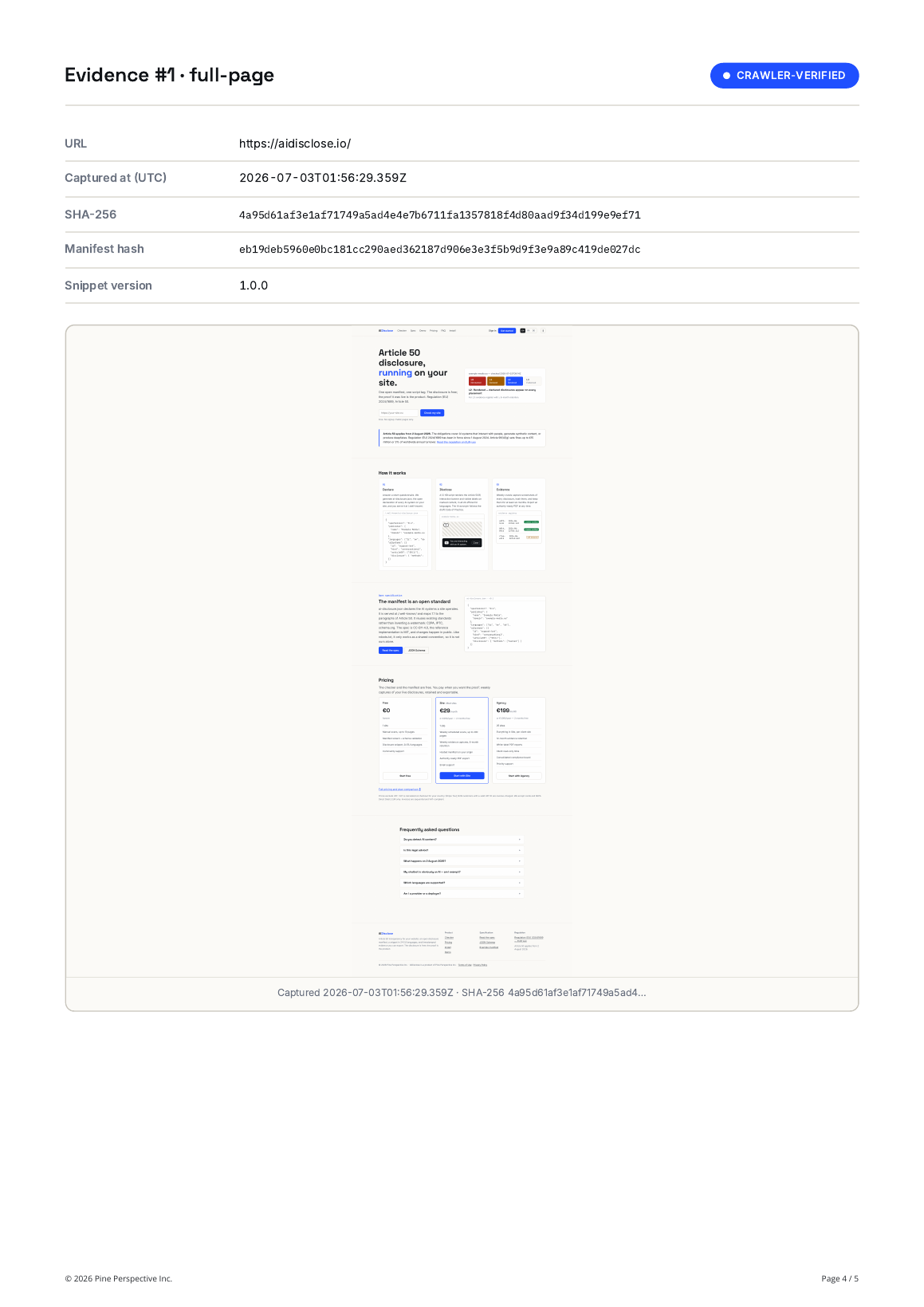
Three pages from a real evidence export of our own site. Dated, hashed, and ready to hand to a market-surveillance authority.
 123
123
Cover: the verdict at a glance
- Scope: organisation, domain and the reporting period.
- The conformance level on the Level 1 to 3 meter, as of the export date.
- The manifest hash chain starts on the cover.
 123
123
Timeline: one row per capture cycle
- Every cycle with its date and time (UTC).
- How many items were captured, and how many are crawler-verified.
- The manifest hash at each capture, chaining the history.
 123
123
Exhibit: the disclosure as the crawler saw it
- crawler-verified, printed on the document.
- URL, timestamp, SHA-256 and snippet version.
- The full-page screenshot exactly as rendered.
Behind the banner
This demo shows what your visitors see, which is the smallest part of the product. Behind it sit your public declaration file, the checker that verifies your disclosures actually render, and sealed weekly snapshots you can export as an authority-ready PDF.
Install
<script>window.AIDiscloseConfig = { manifestUrl: "/.well-known/ai-disclosure.json" };</script>
<script src="https://cdn.aidisclose.io/v1/aidisclose.js" defer></script>

<!-- mark AI-generated content anywhere on the page -->
<img data-ai-content src="/img/generated-illustration.webp" alt="…">
<p data-ai-content>…</p>
8.2 KB, no dependencies, no tracking. Banner texts can be overridden per system in your manifest; the localized AI acronym (KI, IA, ИИ, …) follows the EU Code of Practice.